Planetary musingsOn cosmic grandeur, primordial soup, Beethoven, Debussy, the blues, authenticity, Elvis, Eminem, brand voice and Angela Rayner.
SONG
WRITINGSNICK I wrote it about four years ago, and for most of the time it felt like I was writing a joke to myself that would never see the light of day. Initially, I liked the opening two lines (Hey little planet, lonely and blue) and the whole idea of a lovelorn singer addressing the planet, and identifying with its loneliness—think I had Carl Sagan’s ‘pale blue dot’ in mind. As the song goes on, the singer notionally leaves the planet (the clouds parting at the end of the bridge) and wonders if there’s anyone out there on other worlds. By the end, the singer becomes identified with humankind itself, which crawled out of the oceans and went through all the hassle of evolving, only to find itself apparently alone in the universe. I liked that whole scale shift, escalating from standard ‘feeling a bit sad’ sentiment, to this existential ‘astronomically sad and solitary’ blues. The reason it felt like a joke to myself? Mainly that it was called Planetary Blues—and it felt vaguely preposterous for me to write a ‘blues’ song at all. Plus, it’s not a standard blues in terms of chord structure. And I leaned into the comic side with forced rhymes like water/oughta, Betelgeuse/blues, and singing about hemispheres in what is supposedly a blues song. All of which felt like a strange thing to throw at you. But then you turned it into something stranger—sort of a blues, but also orchestral and cinematic. We used the phrase ‘cosmic grandeur’ a lot as we batted it back and forth. KATE I was excited to get started on the song, because I’ve loved singing jazz and blues over the years. First as a student, in dingy pubs, more recently in Soho with a pianist pal of mine. Usually the better-known stuff—Ray Charles, Billie Holiday, Etta James. Stuff that people can tap their toes to while they have a drink. So, I couldn’t wait to have a go at the vocal. HOWEVER. I was less confident about the accompaniment. Because I’ve only ever played classical piano. And blues piano is a whole other kettle of primeval sea creature. At that time, I’d been listening to Fantasie Negre by Florence Price, a black composer who combined the music of the African American church with European classical influences (Fantasie Negre takes its theme from the spiritual Please Don’t Let This Harvest Pass). The effect is stunning, and I started to wonder if I could do something interesting by mixing my classical background with my interest in jazz and blues. So, searching for classical pieces with an existential vibe, I thought of Beethoven’s ninth symphony: a tribute to humanity itself. The first movement opens with strings growing out of the silence, sounding much like an orchestra tuning up, creating what has been described as a musical ‘primordial soup’. This felt like the perfect starting point for our accompaniment—a nod to the fact that the blues is the place where so much of our popular music was born. While playing around with some chords for the accompaniment, I was reminded of a moment in Debussy’s Clair de Lune. And I couldn’t resist stealing this moon-related snippet and using it as another astronomical reference point. I also developed a little piano figure, based on ‘blue’ notes—this is the figure you hear at the very end of Planetary Blues. Suddenly our accompaniment was coming together. I demonstrate some of these musical points in this video: 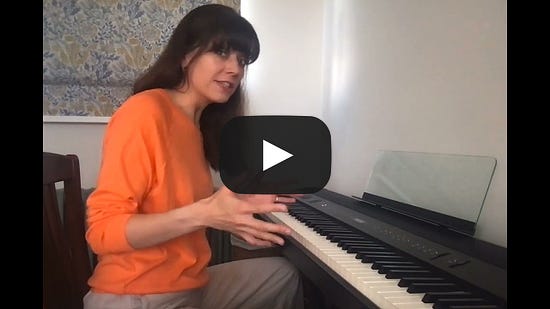 Musically, I was happy with the outcome. But I had a nagging feeling. Florence Price was a black woman, bringing the music of her history into the classical tradition. My own mixing of styles wasn’t from the same perspective. However respectful we intended to be, what did it mean that we—two white, middle-class people—were playing the blues? Was that the kind of question I should know the answer to by now? NICK I’m ultimately a universalist when it comes to music—I think the whole story of jazz, blues and rock ’n’ roll has been this constant interplay between cultures, and the identity lines get more complex the closer you look at them. Most of the Great American Songbook could be called the Great Russian Jewish Immigrant Songbook, with names like Irving Berlin (Israel Beilin), Harold Arlen (Hyman Arluck), George Gershwin (Jacob Gershwine) and Richard Rodgers (Richard Rogazinsky). Equally, a lot of great black pioneers like Duke Ellington and Miles Davis were consciously drawing on classical traditions and training, and were hailed in their time as greats on a par with Stravinsky. BUT the blues has always been a special case. However much it’s become a universal form through Elvis, the Rolling Stones, Dylan, Janis Joplin and countless others, its particular origins in work songs and spirituals means it feels, at best, inauthentic for white musicians to breeze in and casually adopt it. For me, it’s all about the spirit in which it’s done. It’s partly a question of taste (and this is a totally random example to pick out), but I find there’s a cringe factor when you see people like Hugh Laurie adopting this Deep South persona, even though he’s a brilliant musician who I’m sure has infinite respect for the music and the cultural traditions around it. Going back to Planetary Blues, I love the primordial soup that you brought into it, and the nod to Debussy—both are so right thematically and musically. And I think there’s an authenticity to you doing that—it comes out of the influences you’ve soaked up in your life and training. Similarly with the lyrics, it would feel worse to me if I was writing about working on the railroad or catching the last train to Memphis. But hemispheres, Betelgeuse and existential loneliness—it’s almost literally universalist. Related to all this, I’ve just finished reading Let’s Do It by Bob Stanley, all about the history of pop music from 1900-1950. It’s eye-opening on how deep and enduring the levels of racism were, and also on how progressive many of the individual attitudes were, among so many people so early on. There’s so much more we could say on all that, but I’ll bat back to you first. KATE I didn’t grow up in a house with Professor Longhair coming from the radio. The first time I played a blues was likely when I learning piano—probably a kids’ piece called ‘Homework Blues’ or something. This would have been before I took up the sax, at least partly inspired by Lisa Simpson. Then, as a teenager, I met some blues-loving amateur musicians who encouraged me to sing jazz, largely because my low voice seems to suit that music (much like the way I ended up bassooning because of my big hands). None of which feels like a very authentic way in. Of course, many of us come to music in weird ways. And we often feel that a musician can ‘earn’ authenticity in a genre once they've put a certain amount of work. But how much work? And who decides? And are some kinds of authenticity more important than others? While I think that Planetary Blues is an authentic representation of my own musical leanings, I know full well that I’m no representative of the blues! (Doing a quick handbrake turn here into the world of copywriting, this makes me think of the ongoing question of whether it’s more ‘authentic’ for an employee to communicate with a customer in their own voice or the voice of the brand…) Back to music: I wonder whether authenticity is, at best, of limited use. And, at worst, a sinister kind of gatekeeping, particularly when it comes to class. Let’s imagine a working class kid playing Bach—a kid who is naturally gifted and works hard but doesn’t have a teacher who can help them develop their technique. Is that pupil destined to be ‘inauthentic’ (which, in contemporary culture, seems to be one of the most damning criticisms we can make)? Do we differentiate between authenticity of style and authenticity of passion? How do we avoid the kind of unpleasant bar-setting associated with people who are more obsessed with owning shelves of vinyl than the music itself, or those who police Star Wars as if you’re only allowed to be ‘a real fan’ once you know a certain amount of trivia? But it goes without saying that the blues / classical comparison is key here. Because while it feels right to democratise classical music—a form perceived as elitist—the blues is a different story. And concerns about white musicians using black music for clout are not ancient history (in 2002, Eminem described himself in Without Me as being ‘the worst thing since Elvis Presley / To do black music so selfishly’). NICK But back to music. I find that whole idea of authenticity really interesting—your point about class reminds me of the fuss over Angela Rayner showing up at Glyndebourne, where there were so many unsatisfactory assumptions about class and music ingrained in the whole thing. And to show how complicated all this gets, I’m reminded of this fascinating thread about the popularity of ‘redneck’ country music in rural sub-Saharan Africa—it’s apparently a huge cultural phenomenon. Of course, you can get deep into arguments about what forms of ‘appropriation’ are more acceptable than others, and it might involve some complex hierarchies similar to the ones invoked in talk of ‘punching up’ versus ‘punching down’. But the main distinction I’d make is between the creative and the commercial. There has always been an undeniable ruthlessness about the way the music business appropriates and exploits influences from all directions. But music artists (from Elvis to Eminem) are almost always doing it in a spirit of great humility, love and creative honesty. One last point about Planetary Blues—I believe there was a flurry of Tin Pan Alley songs with ‘blues’ in the title in the 1920s, even though most followed the conventional 32-bar structure (as Planetary Blues basically does, plus an extra verse). You could see that as a problematic tradition, but I also think it’s kind of beautiful—to see these songwriters (often Jewish, working class and/or closeted gay) creating these popular songs which reached their full expression through artists like Ella Fitzgerald and Nina Simone. None of which is to get too rose-tinted about it all—that Bob Stanley book also talks about Al Jolson and others, and it’s hard to believe it was all less than a century ago. Anyway. I love the way you sing the song, and the way it’s layered onto that classical backdrop. It just sounds good. Any closing thoughts before we send this one into orbit? KATE Only to say, it’s interesting to talk about this with the new Elvis film coming out (naturally, there are some heated conversations about his legacy over on Twitter). Especially your point about creativity and commerce, which feels very knotty. From around 17 minutes in, this episode of Revisionist History looks at Don’t Be Cruel, written by the black songwriter Otis Blackwell and recorded by Elvis. Presenter Malcolm Gladwell and his producer are shocked at how closely Elvis copies the original song: ‘What hurts is when a so-called genius takes the song that you wrote and that came out of your cultural community and doesn’t change a lick of it.’ As if the problem here is not that Elvis isn’t stylistically correct, but that he isn’t giving anything of himself to the music (maybe back to the idea of competing authenticities here?). But, apparently, Blackwell felt that Elvis performed the song as it was meant to be performed. When he sold it, he didn’t simply sell notes on sheet music but the phrasing and vocal tics that made those notes sound great. So, can we really separate the creation of the artist that was Elvis from the commercial machinery that disadvantaged creators like Blackwell? Finding it difficult not to end with a pun about these being Muddy Waters. Thanks as always for reading / watching / listening—always great to hear your comments and messages, and please feel free to share.
© 2022 Nick Asbury / Kate van der Borgh
|
Planetary musings
August 19, 2022
0